

A note from the chef
Katsuobushi, explained for cat people
The centuries-old Japanese craft behind every bag — how a whole bonito becomes a flake lighter than paper.
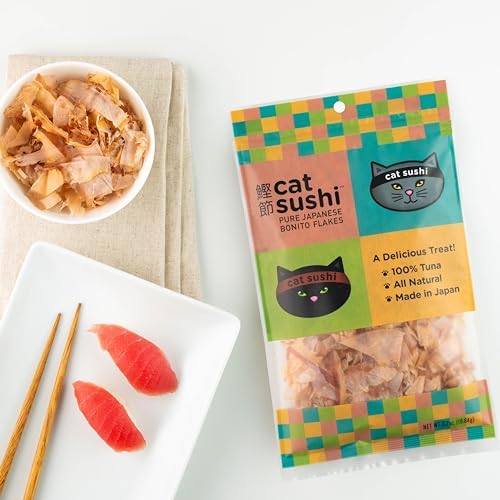
Katsuobushi — the 鰹節 printed beside the Cat Sushi wordmark — is one of the oldest preserved foods in Japan. A whole skipjack tuna (katsuo) is filleted, simmered, smoked over oak repeatedly for weeks and then dried until it is harder than most wood. Kitchens in Japan have shaved it into delicate flakes for centuries; it is the backbone of dashi, the broth underneath most of Japanese cooking.
The shaving is the whole trick. A block of katsuobushi is nearly all concentrated protein and umami, and the thinner it is shaved, the more of that aroma is released the moment it hits the air. That is why classic cut flakes seem to reach a sleeping cat two rooms away — the smell does the announcing.
Cat Sushi takes exactly one liberty with the tradition: the flakes are sifted and portioned for cats instead of soup. Nothing is added at any point — no salt, no preservatives, no flavoring. The bag is nitrogen-flushed in Japan the moment it is packed, which is the same trick coffee roasters use to keep aroma from aging in transit.
So when the label says one ingredient, it undersells the work slightly. It is one ingredient and several weeks of craft — fished, smoked, dried, shaved and sealed before it ever crosses the ocean to your counter.